How Much Should My Baby Eat – Understanding Portion Sizes and Feeding Cues

Feeding your baby can feel like a puzzle. You want to make sure they’re getting enough nutrients for growth and development—but not too much, and without causing stress at mealtimes. The key is learning to read your baby’s cues and understanding age-appropriate portion sizes.
Every Baby is Different
Babies grow at their own pace, and their appetites vary from day to day. One day they may finish every bite, and the next they may turn away after just a few spoonfuls. This is completely normal. Trusting your baby to guide how much they eat is one of the most important steps in developing healthy eating habits.
It’s also important to remember that growth is gradual. Pediatricians track weight, length, and head circumference over time. If your baby is steadily growing along their curve, they are likely getting the right amount of food, even if it seems small to you.
Recommended Portions by Age
Here’s a general guide for portion sizes, keeping in mind that every baby is unique:
4–6 months (starting solids):
- 1–2 teaspoons per feeding, once or twice a day
- Focus on iron-rich foods first, like fortified cereals or pureed meats
6–8 months:
- 2–4 tablespoons per feeding, two to three times a day
- Include fruits, vegetables, grains, and protein
- Offer soft finger foods to encourage self-feeding
8–10 months:
- 3–4 tablespoons per feeding, three times a day, plus 1–2 snacks
- Continue a variety of textures: mashed, soft chunks, and small pieces
10–12 months:
- ¼ to ½ cup per feeding, three times a day, plus 1–2 snacks
- Offer a wider variety of family foods, adjusting for salt, sugar, and texture
Remember, these are guidelines, not strict rules. Your baby’s appetite will fluctuate, and that’s normal.
Reading Baby’s Hunger and Fullness Cues
Babies are born with the ability to regulate their intake—they know when they’re hungry and when they’re full. Your role is to respond to these cues, rather than pushing them to finish every bite.
Signs of hunger:
- Rooting or turning their head toward your hand or spoon
- Opening their mouth for food
- Showing excitement when food is offered
- Reaching for food
Signs of fullness:
- Turning their head away
- Pushing food away with hands or tongue
- Losing interest in eating
- Closing their mouth
Responding to these cues helps your baby develop healthy self-regulation, which can prevent struggles with overeating later in life.
Tips for Encouraging Healthy Eating
- Offer variety, not pressure: Repeated exposure to different flavors and textures matters more than finishing the plate.
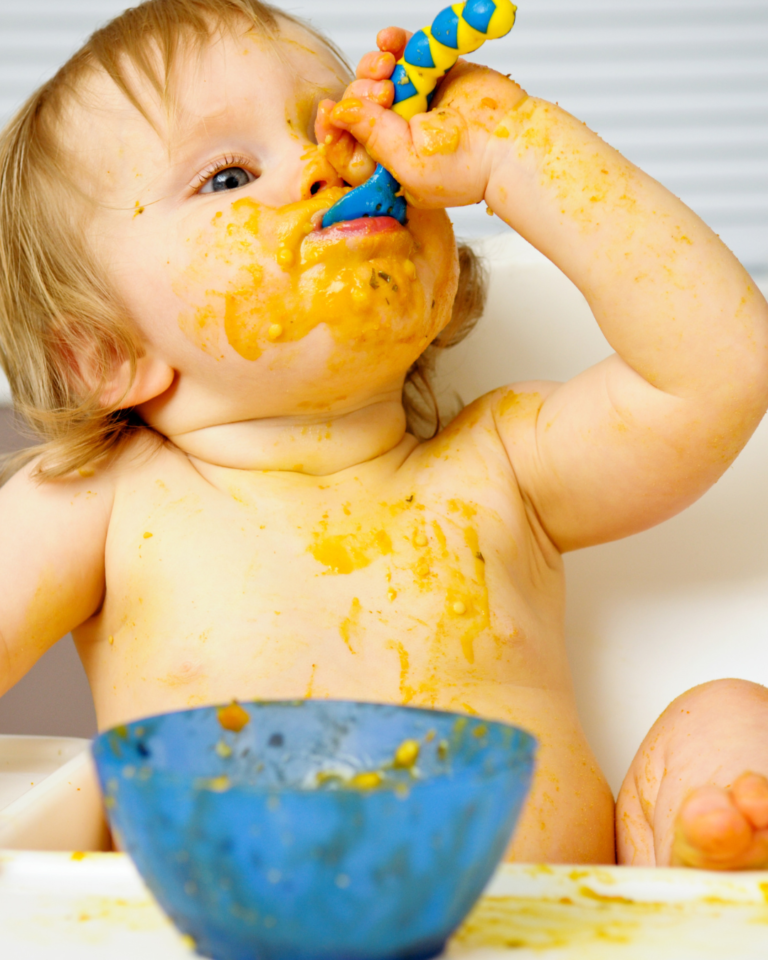
- Let your baby lead: Encourage self-feeding with safe finger foods. It supports motor skill development and independence.
- Keep mealtimes relaxed: Avoid distractions like screens, and make eating a positive experience.
- Balance meals: Include protein, iron-rich foods, vegetables, fruits, and healthy fats at each meal.
- Trust your instincts, too: If you notice persistent refusal or a dramatic change in appetite, discuss it with your pediatrician.
Understanding Growth Alongside Feeding
Portion sizes are only one piece of the puzzle. Your baby’s growth, energy levels, and developmental milestones are the best indicators of whether they’re eating enough. Growth charts are helpful, but so are everyday observations: is your baby alert, active, and meeting milestones? If yes, your baby is likely getting enough nourishment.
Takeaway
Feeding your baby is a balance between providing nutritious options and responding to their cues. Offer age-appropriate portions, watch for hunger and fullness signs, and remember that appetite can vary daily. Trust your baby, stay flexible, and focus on making mealtimes positive and exploratory.
By letting your baby lead and offering a variety of healthy foods, you’re not just feeding them—you’re teaching lifelong skills for a healthy relationship with food.