Nourishing Pregnancy: A Mind-Body First Approach

Pregnancy brings big changes—physically, emotionally, and nutritionally. Before diving into nutrients and meal plans, I always like to start with the foundation:
Mind-Body Connection Comes First 🧠
If you’re tuning into hunger, fullness, cravings, and emotions around food, you’re already doing important work. Honoring cravings, staying curious about “food noise,” and letting go of food guilt all support a healthy pregnancy.
There’s no one “right” way to eat during pregnancy. What matters most is nourishment that feels supportive, flexible, and sustainable as your body changes.
Key Nutrients for a Healthy Pregnancy
Food comes first whenever possible, with supplements filling in the gaps. Here are the main nutrients most pregnant people need to focus on:
🌱Folate (or Folic Acid)
Aim for: 400–600 mcg per day from supplements plus food
Why it matters: Supports early brain and spinal cord development
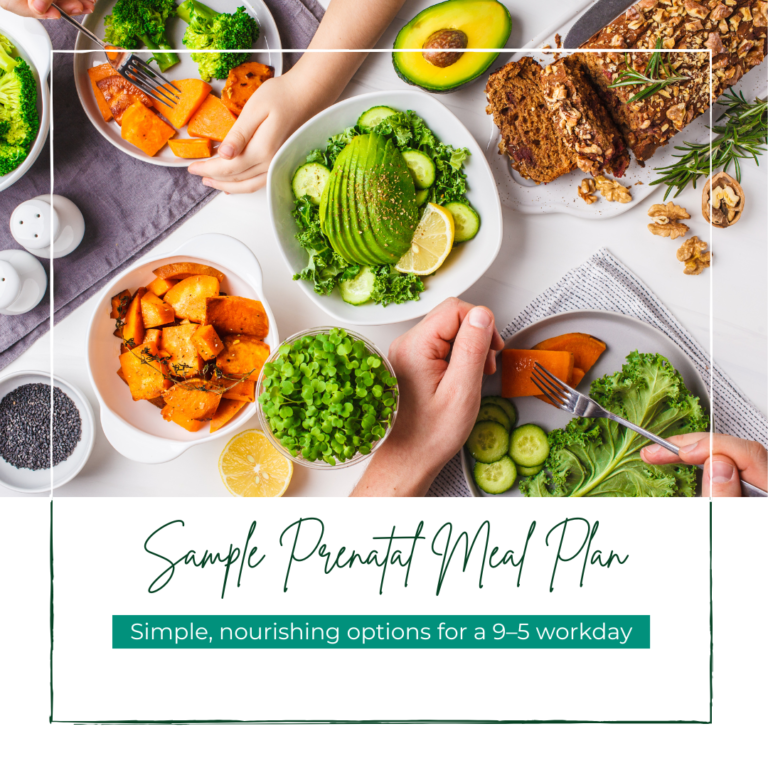
Food sources: Lentils, leafy greens, oranges, fortified cereals, avocados
🐟Omega-3 Fatty Acids (DHA)
Aim for: 200–300 mg DHA per day
Why it matters: Supports baby’s brain, eye, and nervous system development
Food sources: Salmon, sardines, trout, DHA-enriched eggs
Plant-based note: Chia, flax, and walnuts provide ALA, not DHA
Tip: An algae-based DHA supplement is a great option if you don’t eat fish
💪Iron
Aim for: 27 mg per day
Why it matters: Supports baby’s growth and helps prevent anemia
Food sources: Red meat, lentils, spinach, tofu, fortified grains
Tip: Pair iron-rich foods with vitamin C (like citrus or bell peppers) and avoid taking iron with calcium at the same time
🦴Calcium
Aim for: 1,000 mg per day
Why it matters: Builds baby’s bones and protects your own
Food sources: Yogurt, cheese, fortified plant milks, almonds, leafy greens
Tip: Spread intake across the day—your body absorbs about 500 mg at a time
☀️Vitamin D
Aim for: 600 IU per day (some people need more based on labs)
Why it matters: Supports bone health and immune function
Food sources: Fortified milk or plant milk, fatty fish, egg yolks
Tip: Most prenatal vitamins include vitamin D, but supplementation may be needed if levels are low
Balanced Plate Basics 🍽
If you’re already working on consistent carbohydrates, you’re on the right track. A gentle framework:
- Carbohydrates: Fruits, oats, potatoes, whole grains
- Protein: Aim for ~75–100 grams per day to support growth and reduce nausea
- Healthy fats: Avocado, olive oil, nuts, seeds
- Fluids: 8–12 cups per day, adjusting as needed
Hydration & Salt Support (Especially for POTS) 🫗
Pregnancy increases fluid needs, and for those with POTS, hydration and sodium are especially important.
- Sip fluids throughout the day
- Use electrolytes, broth, or salted snacks
- Hydrating foods like watermelon, cucumber, and citrus count too
Making Peace with Vegetables 🥦
If vegetables feel challenging right now, that’s okay.
- Start small—even a few bites counts
- Blend into familiar foods like soups, pasta, or smoothies
- Roast with olive oil and salt for comfort and flavor
- Check in with how it feels physically and emotionally—no pressure
Handling Comments or Judgment 💬
Food choices during pregnancy can attract opinions. Neutral phrases can help set boundaries:
- “I’m doing what feels right for my body.”
- “My choices are based on what I need right now.”
Your food is your business. Full stop.
What’s Next
- Continue honoring hunger, fullness, and mood cues
- Maintain hydration and sodium strategies that support symptoms
- Take a prenatal vitamin daily (check for folate, iron, calcium, vitamin D, and DHA)
- Explore food variety at your own pace