Welcome to the World of Eating!

Introducing solid foods is one of the most exciting milestones in your baby’s first year. It’s a time of exploration, messy faces, and learning what foods your baby enjoys. But it can also feel overwhelming—there are so many recommendations, charts, and advice from friends and family. How do you know when your baby is ready? What foods should you start with? And how much should they eat? Let’s break it down.
When to Start Solids
For the first four to six months, your baby doesn’t need solid foods. Breast milk or formula provides all the nutrition they need, including hydration and essential vitamins and minerals. Breastfeeding is especially protective for your baby’s immune system, digestive health, and brain development. If you are breastfeeding, your baby should also get a vitamin D supplement of 400 IU per day to support healthy bone growth. 🍼
Why wait until 4–6 months?
Starting solids too early can put stress on your baby’s immature digestive system and kidneys. It doesn’t increase growth or help your baby sleep better—it just adds unnecessary complexity. Waiting ensures that your baby has the motor skills, oral control, and developmental readiness needed for safe eating.
Signs Your Baby Is Ready
Around 4–6 months, most babies start showing cues that they are ready to try new foods. These cues include:
- Sitting up with support – Your baby can hold their head steady and sit in a high chair.
- Showing interest in food – They may watch you eat, reach for your plate, or open their mouth when food is offered.
- Loss of tongue-thrust reflex – Babies are born with a reflex that pushes solids out of the mouth. This usually fades around 4–6 months.
- Ability to swallow – Your baby can move food from the front of the mouth to the back and swallow safely.
It’s important to follow your baby’s cues rather than just the calendar. Some babies may be ready a little earlier, and some a little later—it’s normal.
The Role of Breast Milk or Formula
Even after you introduce solids, breast milk or formula remains the main source of nutrition until at least 12 months. Solids at this stage are mostly about learning flavors and textures and slowly introducing nutrients like iron and zinc.
- Breastfed babies: Continue feeding on demand while gradually offering small amounts of solids.
- Formula-fed babies: Formula continues to provide the bulk of calories. Start with one small feeding of solids per day and increase gradually.
Keep in mind: solids at this age are complementary, not replacement foods.
Getting Started
Start with iron-rich foods because babies’ natural iron stores begin to decrease around 4–6 months. Options include:
- Iron-fortified baby cereals (mixed with breast milk or formula)
- Pureed meats like chicken, beef, or turkey
- Mashed beans or lentils
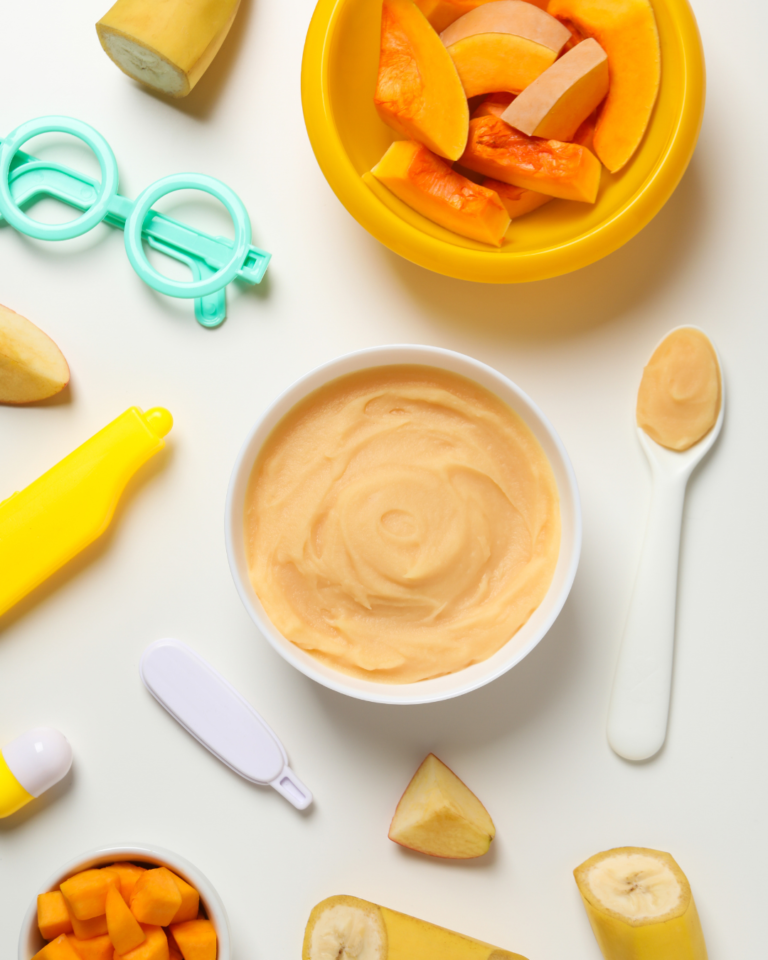
Once iron-rich foods are introduced, add fruits and vegetables. Try a variety of colors and textures:
- Orange: carrots, sweet potatoes, butternut squash
- Green: peas, broccoli, zucchini
- Red/purple: beets, red bell peppers, berries
Offer foods one at a time and wait 3–5 days before introducing a new food. This makes it easier to notice potential food sensitivities or allergies.
Allergenic Foods
Research now shows that early introduction of allergenic foods may reduce the risk of food allergies. Once your baby is ready for solids:
- Introduce peanut, egg, tree nuts, soy, and shellfish in age-appropriate forms.
- Smooth peanut butter mixed with breast milk, formula, or water is safe; never give whole peanuts.
- Always supervise your baby while trying new foods.
Tips for Success
- Take it slow: Start with a teaspoon or two at a time.
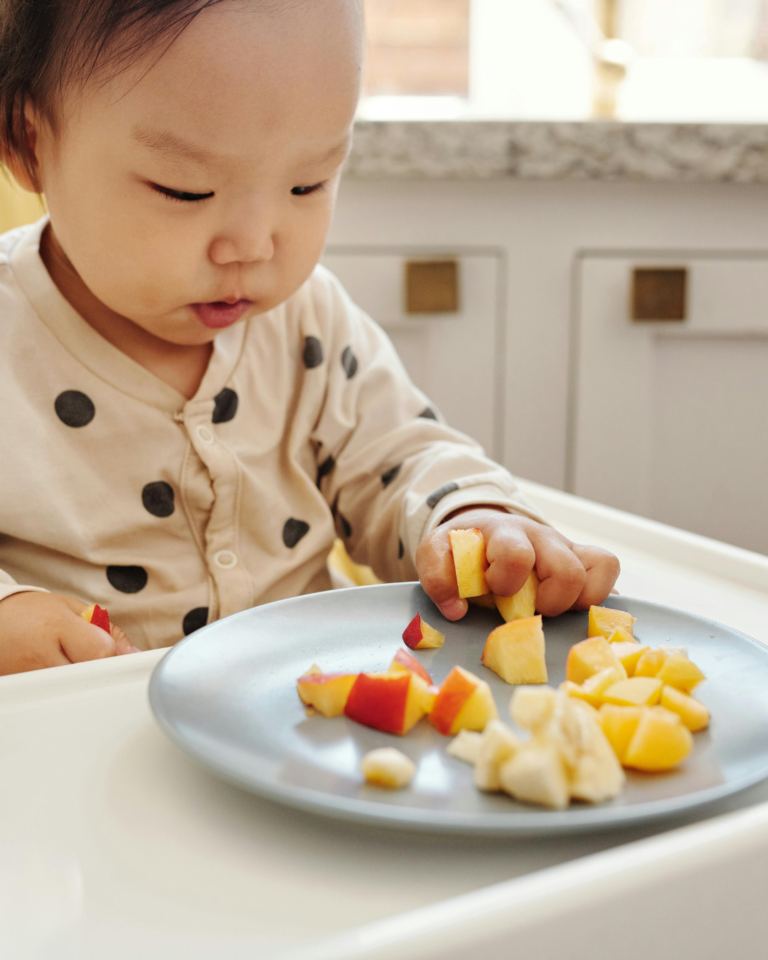
- Make it fun: Use spoons, bowls, and cups that are easy for your baby to grab.
- Follow your baby’s cues: Let them decide how much to eat. Don’t pressure or force-feed.
- Expect mess: Eating is a sensory experience. Encourage exploration, not perfection.
Takeaway
Introducing solids is about more than nutrition—it’s about helping your baby explore tastes, textures, and the joy of food. Watch for readiness cues, continue breastfeeding or formula, start with iron-rich foods, and offer a variety of fruits and vegetables. Be patient, follow your baby’s lead, and enjoy this special stage of growth.
Every spoonful is a step toward healthy eating habits for life!